Can Hail Damage Vinyl Siding? What to Look For After a Storm
The short answer is yes: hail can absolutely damage vinyl siding, and in the Chicagoland suburbs it happens more often than most homeowners realize. Hail season here runs roughly May through September, and when a storm rolls across Palatine or Schaumburg, the roof usually gets all the attention. Your siding deserves a careful look too, because the signs of hail damage on vinyl are easy to miss from the driveway.
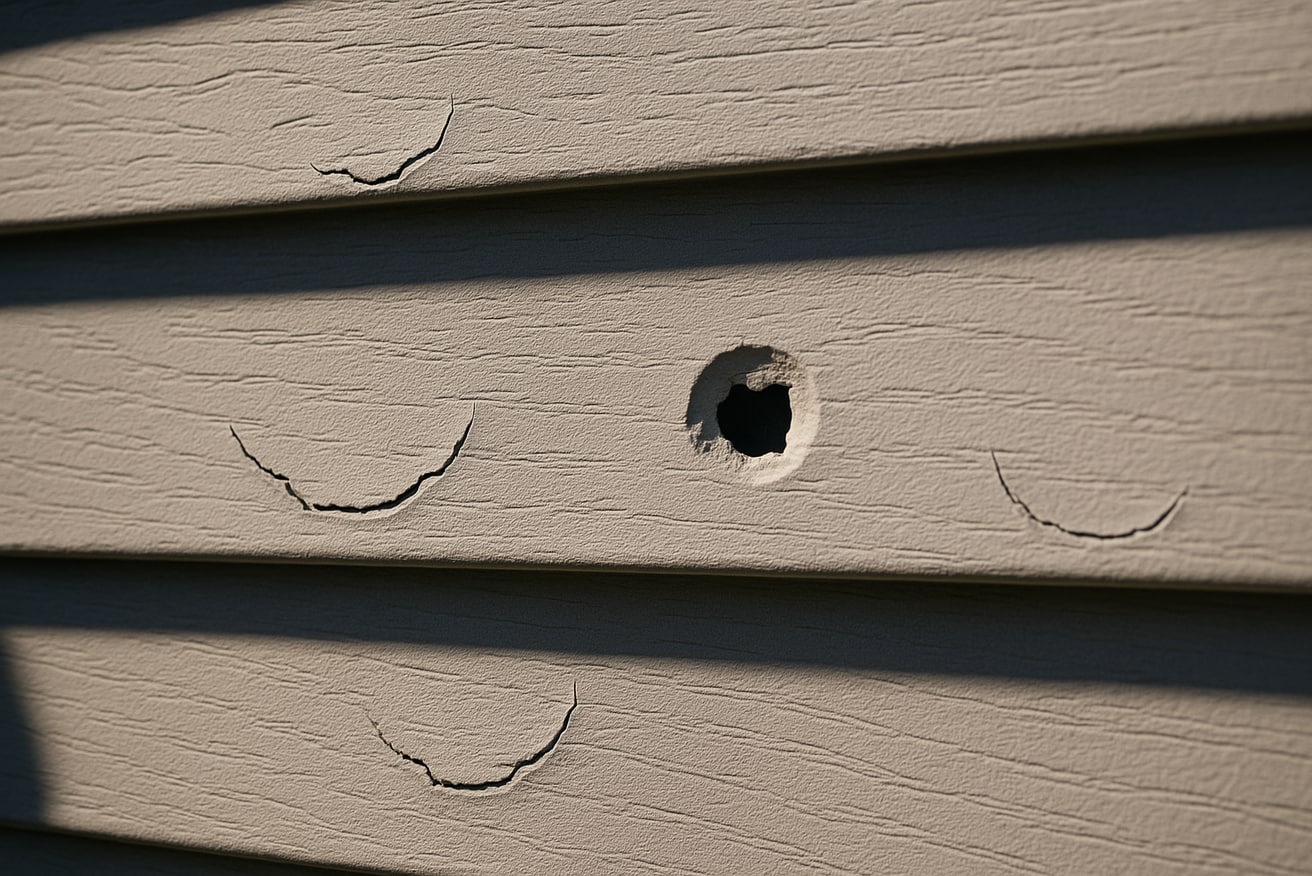
So what does the damage actually look like? Cracks, chips, and outright holes. Vinyl is a resilient material, but it has limits, and hail just slightly larger than an inch across can punch straight through a panel. The classic hail signature on vinyl is a half-moon shaped crack, a curved fracture left where the hailstone struck and flexed the panel past its breaking point. If you spot several of those crescent-shaped cracks scattered across one wall, you are almost certainly looking at hail damage rather than ordinary wear.
Temperature plays a bigger role than people expect. Vinyl gets brittle in the cold, so a spring storm that arrives on a chilly day can crack panels that would have shrugged off the same hail in July. Wind direction matters too. Hail rarely falls straight down; it gets driven at an angle, which means the damage concentrates on the side of the house that faced the storm. It's completely normal to find a badly damaged west wall and three untouched elevations.
There's a subtler clue worth knowing as well. Older vinyl develops a light, chalky layer of oxidation on its surface over the years. When hail strikes an oxidized panel, it can knock that layer loose, leaving spots or streaks that look cleaner and shinier than the surrounding siding. Those marks may not be structural damage on their own, but they map exactly where the hail hit and help tell the story of the storm.
That one-sided pattern actually works in your favor when it comes to insurance. Adjusters expect hail damage to be directional, so consistent damage concentrated on the storm-facing elevation supports a claim rather than undermining it. And because hail rarely damages siding without also hitting the roof, gutters, and window wraps, siding claims tend to be strongest when the whole exterior is inspected and documented together as a single claim. Filing them together also spares you the frustration of a mismatched exterior repaired one piece at a time.
If you do end up replacing hail-damaged siding, it's worth asking about insulated vinyl. The rigid foam backer bonded to each panel adds insulation value and quiets the wall, but it also stiffens the panel from behind, which makes it noticeably more resistant to impact the next time hail comes through. Standard vinyl already performs well here, typically lasting thirty to forty years in our climate, so an upgrade that helps it shrug off hail is a sensible place to spend a little more when insurance is covering the replacement anyway.
After any storm this season, whether you're in Crystal Lake or Arlington Heights, take ten minutes to walk your home's exterior, or let a professional do it properly. Dynasty Restoration provides free storm damage inspections, documents everything with photos, and can meet your adjuster on site if a claim makes sense. Catching a cracked panel now is far cheaper than discovering water damage behind it a year from now.