A Derecho and a Tornado Outbreak in 48 Hours: What June 10 and 11 Mean for Your Roof
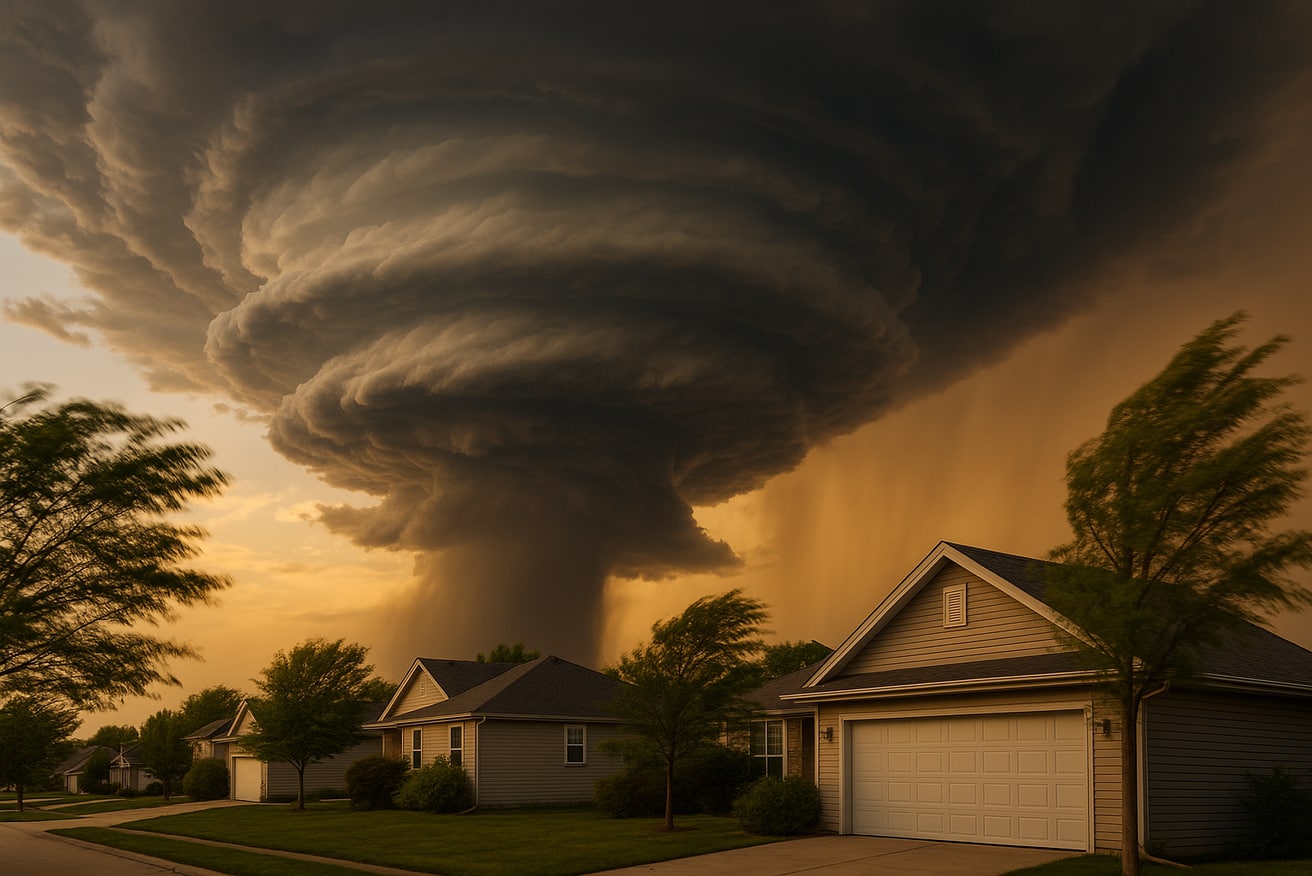
Northern Illinois just took two heavy punches in two days. On Wednesday, June 10, a derecho produced widespread wind damage across the region. Then on Thursday, June 11, a regional tornado outbreak brought confirmed tornadoes to the area, including two EF-2s and two EF-3s in the NWS Chicago forecast area. Forecasters have described 2026 as a very active start to the severe weather season, and homeowners across the northwest suburbs, from Schaumburg and Hoffman Estates out to Crystal Lake and McHenry, are still cleaning up.
Back-to-back wind events do something that a single storm does not: they create fatigue damage. Asphalt shingles are held down by adhesive seal strips that bond each shingle to the one below it. A derecho's sustained straight-line winds can break those seals without tearing the shingle off, leaving it lying flat and looking perfectly normal. When the second event arrives twenty-four hours later, those unsealed shingles have no resistance left. Shingles that survived day one weakened, then failed on day two. That is why we are seeing roofs this week with creased, flipped, and missing shingles even in neighborhoods nowhere near a tornado track.
That last point deserves emphasis. The tornadoes themselves carved relatively narrow paths, but the broader outbreak and the derecho before it pushed damaging straight-line winds, in many areas 60 mph or stronger, across a huge swath of the suburbs. Wind at that speed lifts shingle edges, creases the mats along the nail line, tears off ridge caps, peels back flashing, and drives rain under compromised areas. A creased shingle is a broken shingle, even if it settles back into place. It will fail early, and it will not hold in the next storm.
If you believe your home was affected, documentation matters more than usual right now, precisely because there were two separate events. Insurance claims are tied to a specific date of loss, and with damage occurring on both June 10 and June 11, it is worth writing down what you observed and when: when the power went out, when the fence came down, when you first noticed shingles in the yard. Take dated photos of everything on the ground before you clean it up. A thorough professional inspection can then match the damage pattern on the roof to the right event, which keeps the claim clean from the start.
One more caution, and it is an important one. Major outbreaks like this reliably draw a wave of out-of-town storm chasers, crews that follow severe weather from state to state, knock doors aggressively, and are gone before the first warranty question ever comes up. Before you sign anything, ask for an Illinois roofing license number, a local physical address, and local references. A legitimate local contractor will have all three and will not pressure you to sign on the spot.
Dynasty Restoration is headquartered in Prospect Heights and holds Illinois roofing license number 104.018540. We have restored wind-damaged roofs across the northwest suburbs for years, and when insurance is involved we meet the adjuster at your home, document the damage properly, and see the claim through, including any supplements needed along the way.
If the storms of June 10 and 11 passed over your neighborhood, do not wait for a ceiling stain to tell you there is a problem. Contact Dynasty Restoration for a free storm damage inspection, get clear photos and an honest assessment, and know exactly where your roof stands before the next round of weather arrives.