Emergency Roof Tarping: What to Do in the First 48 Hours After Storm Damage
When a tree limb punctures a roof or a November wind storm peels shingles off a slope, the insurance process starts moving — but water and cold do not wait for it. Rain finds the opening within hours. Temperatures in the northwest suburbs this time of year can push melting snow and ice into the gap a day later. The first 48 hours after storm damage are about one thing: stopping the house from getting worse while the paperwork catches up.
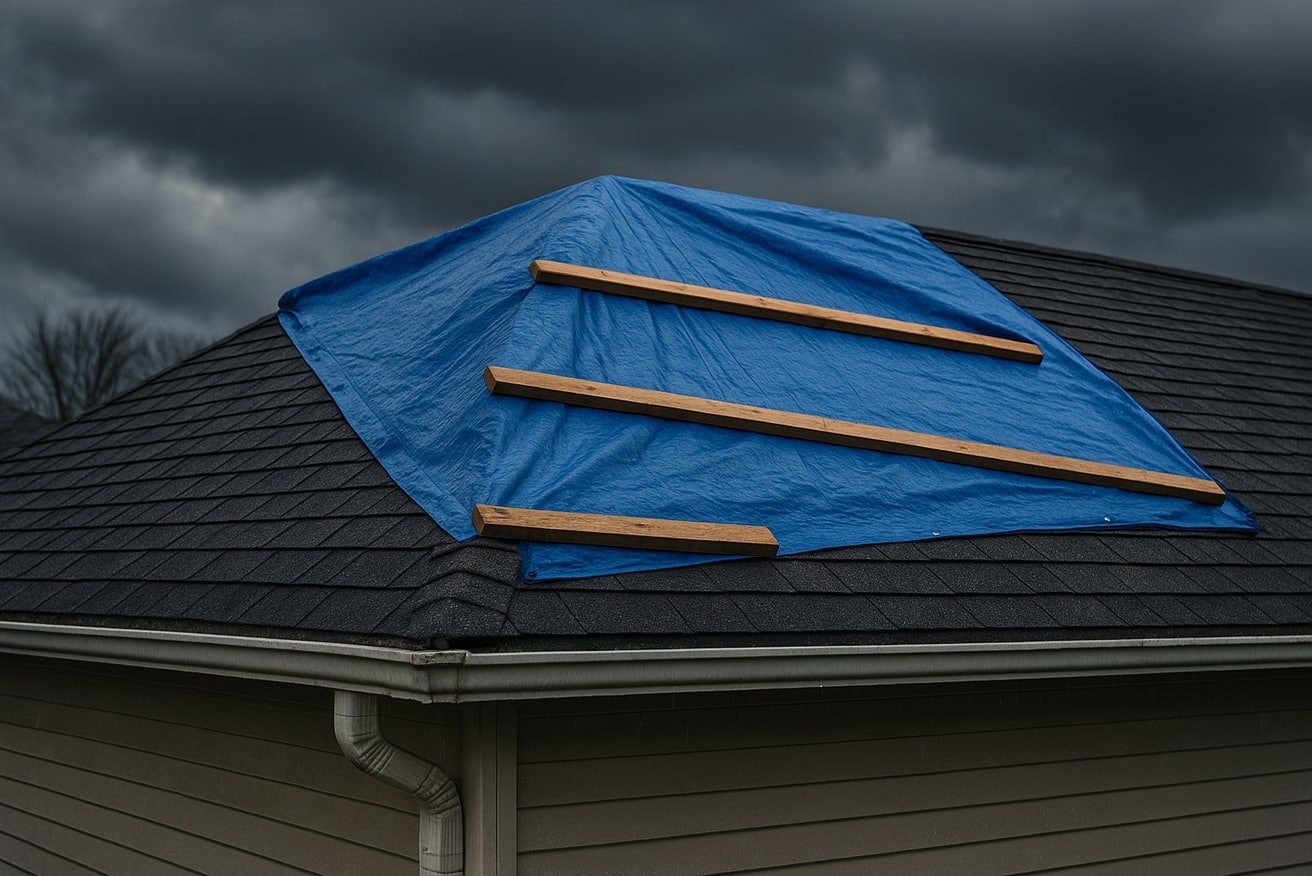
Emergency tarping is exactly what it sounds like — a heavy-duty tarp installed over the damaged section of roof to shed water until permanent repairs can be made. It is a temporary measure, but it is not a casual one. A properly installed tarp can protect a home through weeks of weather, which matters because the gap between storm damage and a completed permanent repair often includes an adjuster visit, an estimate, and material lead times.
There is also an insurance reason to act quickly. Most homeowners policies include a duty to mitigate: you are required to take reasonable steps to prevent further damage after a covered loss. A hole left open for two weeks that soaks the attic insulation and stains three ceilings raises hard questions about which damage the storm caused and which damage the delay caused. The good news is that reasonable mitigation costs, including professional tarping, are typically reimbursable under the claim. Keep every receipt.
Not all tarp jobs are equal. A proper installation carries the tarp up and over the ridge, or otherwise anchors the top edge so water cannot run underneath it, and secures the edges with wood furring strips fastened outside the damaged area. A bad one is easy to spot: a tarp ending in the middle of a slope where water can slip under the top edge, bricks or cinder blocks doing the holding, or dozens of nails punched through the field of the tarp — each one a future leak. Done poorly, a tarp can add damage instead of preventing it.
Whatever you do, do not climb onto a storm-damaged roof yourself. Wet shingles are slick, damaged decking can give way without warning, and a November roof in Wheeling or Northbrook may already be carrying frost by morning. Roof falls turn a property problem into a hospital problem. This is one of those jobs where the smart move is to stay on the ground and put a professional on the roof.
Before any tarp goes on, document everything. Take photos of the damage from the ground, from inside the attic if it is safe to access, and of any interior water staining. Note the date and time of the storm. Your contractor should photograph the roof itself before covering it. Those images become the backbone of your claim, because once the tarp is down, the adjuster may not see the raw damage firsthand.
Once the home is protected, the permanent repair process begins: the inspection, the estimate, the adjuster meeting, and the actual roof work. Dynasty Restoration offers same-day and next-day emergency tarping across the northwest suburbs, from Prospect Heights and Glenview outward, and we handle the full path from tarp to finished roof, including working directly with your insurance company. If a storm has opened up your roof — or you suspect it has — contact us for a free inspection and let the first 48 hours work in your favor.