
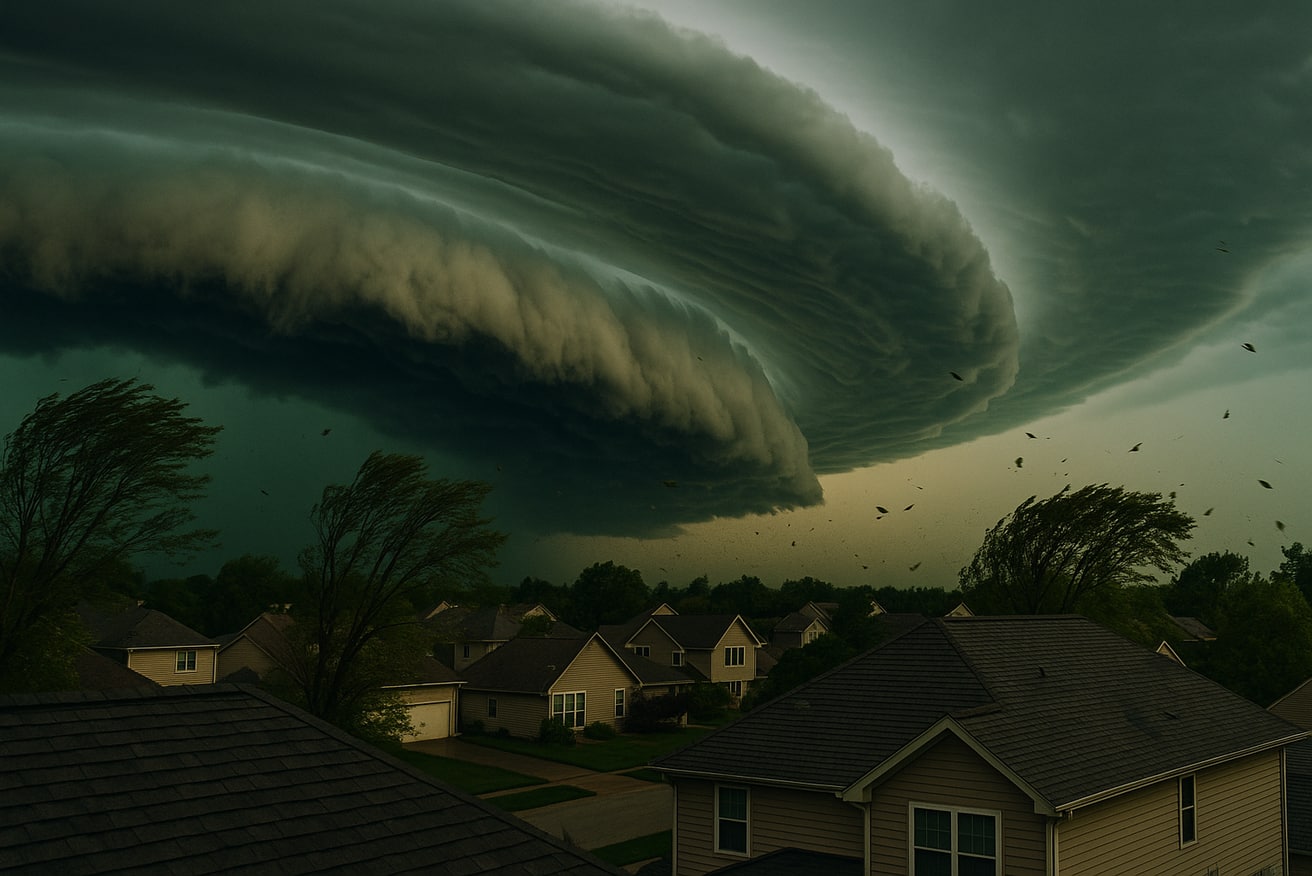
After the July 15 Derecho: A Wind-Damage Checklist for Suburban Homeowners
On the evening of July 15, a derecho — a long-lived, well-organized line of thunderstorms — crossed Iowa, Illinois, and Indiana with widespread damaging winds of 60 to locally 100 mph. The National Weather Service in Chicago ultimately confirmed a record 32 tornadoes from this single event, O'Hare recorded a 75 mph gust, and hundreds of thousands of people lost power across the region. A week later, many homeowners in Arlington Heights, Elk Grove Village, and Crystal Lake are still sorting out what the storm left behind.
What makes a derecho different from an ordinary thunderstorm is scale. A tornado concentrates extreme wind in a narrow path; a derecho spreads winds of 60 to 100 mph — comparable to what a weak tornado produces — across a swath hundreds of miles long. That means the damage is not confined to a few unlucky blocks. Homes across the entire northwest suburban area experienced winds capable of lifting shingles, breaking seal strips, peeling siding, and sending limbs onto rooftops.
Start your checklist with the roof, from the ground. Look for missing or displaced shingles, tabs that sit unevenly, and ridge caps that look cracked or shifted along the peak. Check the yard, driveway, and landscaping for shingle pieces or granule piles. If a limb came down on or near the roof, treat that area as suspect even if nothing looks broken — impact damage to shingles and decking often hides under branches that have already been cleared away.
Next, walk the walls. Wind at these speeds can crack vinyl siding, pull panels loose at the seams, and bend or detach aluminum trim. Look for gaps where siding courses meet, panels that rattle in a light breeze, and dents from wind-driven debris. At the windows, check for torn screens, cracked glass, and bent or lifted aluminum wraps around the frames. Finish with the gutters and downspouts — look for sections pulled away from the fascia, sagging runs, and dents — and give the fence a once-over for leaning posts and cracked rails.
Anything you find should be photographed with a date and noted while July 15 is fresh. Wind is a covered peril under standard homeowners policies, and claims tied clearly to a documented, widely reported storm event tend to move more smoothly. Policies do have filing deadlines, so damage discovered now should be evaluated now rather than set aside for the fall.
A word of caution about the days after a big event like this one: storm-chasing crews from out of state follow derechos the way gulls follow a fishing boat. If someone knocks on your door pressuring you to sign an agreement on the spot, take a breath. You are under no obligation to sign anything, and you are always better served by a local, Illinois-licensed contractor who will still be here next year — and five years from now — to stand behind the work.
Dynasty Restoration is based in Prospect Heights and has been inspecting roofs across the northwest suburbs since well before this storm and will be here long after. If July 15 left you with any doubt about your roof, siding, or gutters, schedule a free storm damage inspection. We will document what we find, tell you honestly whether it rises to the level of a claim, and help you through the process if it does.