
The July 2023 Tornado Outbreak: What Northwest Suburban Homeowners Should Check
On Wednesday evening, July 12, a localized tornado outbreak moved across northeast Illinois in the span of just a couple of hours, roughly between 5 and 7 PM. By the time the National Weather Service finished its storm surveys, the count stood at 13 confirmed tornadoes — three rated EF-1 and ten rated EF-0 — a record number of tornadoes from a single July event for the NWS Chicago forecast area. One of them touched down near O'Hare International Airport, which puts the whole evening uncomfortably close to home for families in Des Plaines, Park Ridge, and Mount Prospect.
It is easy to hear ratings like EF-0 and EF-1 and file the event away as a near miss. But even the weakest tornadoes, along with the straight-line winds that surround them, are strong enough to lift shingle tabs, break the adhesive seal strips that hold a roof together, snap tree limbs onto roof decks, and drive debris into siding and gutters. The tornado itself may carve a narrow path, but the damaging wind field around it is often much wider — which means homes well outside any confirmed track can still take a hit.
Here is the frustrating part: most of this damage is invisible from the ground. A shingle that was lifted by the wind and then dropped back into place looks perfectly normal from your driveway. The seal underneath it, however, may be broken for good. That shingle is now loose, and the next round of strong wind — and in an Illinois summer, there is always a next round — can peel it off entirely and let water reach the decking below.
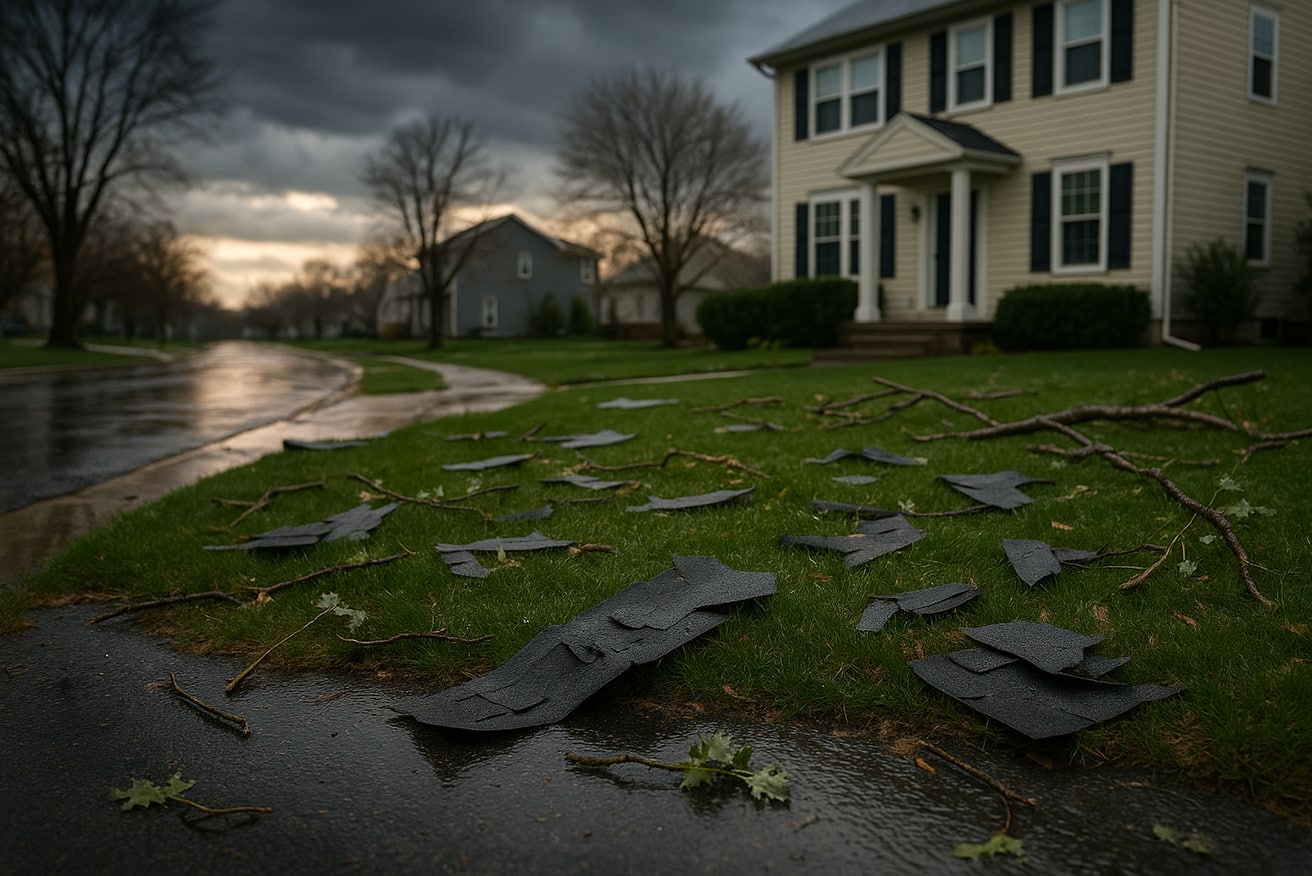
There are still clues you can gather safely from ground level. Walk your property and look for shingles or shingle pieces in the yard, on the driveway, or in the landscaping. Check your gutters and downspouts for fresh dents or an unusual amount of loose granules at the splash blocks. Look for torn window screens, damaged fence sections, and limbs down near the house. From across the street, scan the roof for tabs that appear lifted, flipped, or out of line with their neighbors.
One type of damage deserves special mention: the creased shingle. When wind bends a shingle tab backward and it folds back down, it leaves a horizontal crease across the mat. The shingle stays on the roof and often keeps shedding water for a while, so nothing looks wrong. But that crease is a structural break, and creased shingles routinely fail months later — sometimes in the middle of winter, when a repair is far less pleasant to deal with.
If you find any of these signs, document them now. Take dated photos of everything you can see from the ground, jot down when you noticed it, and keep any shingle pieces you pick up out of the yard. Wind damage from a storm like July 12 is a covered peril under most homeowners policies, and clear documentation tied to a known storm date makes the entire claim process smoother if repairs turn out to be necessary.
The safest next step is to have someone trained put eyes on the roof itself, because the most consequential damage — broken seals, creases, lifted flashing — simply cannot be confirmed from the ground. Dynasty Restoration, based right here in Prospect Heights, offers free storm damage inspections throughout the northwest suburbs, from Arlington Heights to the surrounding communities. If the roof is fine, you get peace of mind. If it is not, you will know exactly what you are dealing with while the storm date is still fresh.