
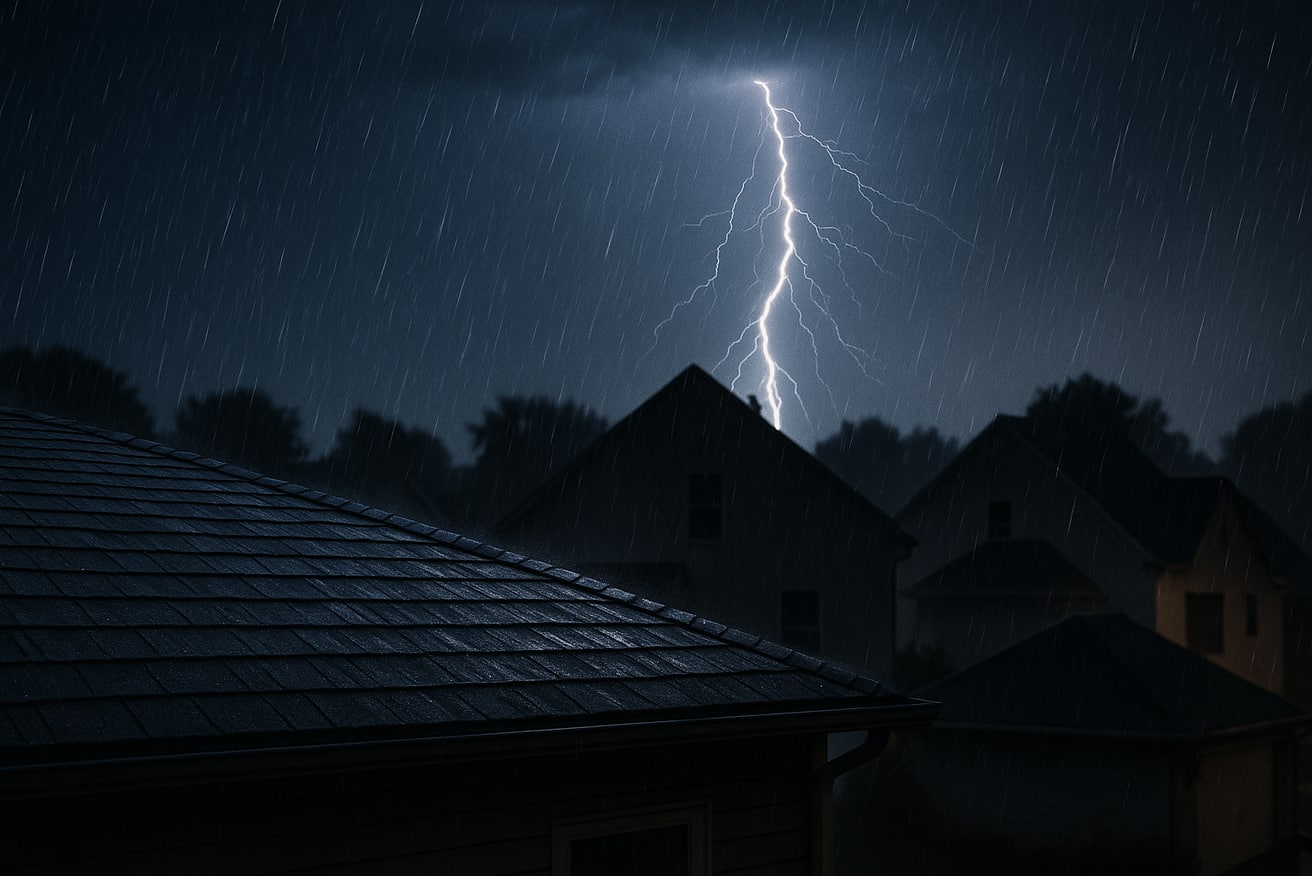
The Late July Storms You Slept Through: Finding Hidden Wind Damage on Your Roof
If you slept well on the night of July 28, you were not alone. Overnight into July 29, multiple rounds of thunderstorms moved across the National Weather Service Chicago area, including several late-night tornadoes and damaging winds. Most of us in the northwest suburbs woke up, glanced at some wet pavement, and went on with the weekend. That is exactly what makes overnight storms like these so easy to underestimate — and it is worth remembering that 2023 has been an extremely active tornado year for northern Illinois.
When a storm rolls through at two in the afternoon, you watch the trees whip around and you naturally think about your roof afterward. When it rolls through at two in the morning, you never see the worst of it. There is no mental bookmark telling you to go look. Homeowners in Palatine, Buffalo Grove, and Schaumburg have told us some version of the same story for years: the roof was damaged in a storm they barely remember happening.
Here is a quick wind damage primer. Asphalt shingles stay on your roof primarily because of a factory-applied adhesive strip that bonds each shingle to the one below it. Strong wind works those bonds loose. Once a seal strip breaks, the shingle can flutter in every subsequent breeze, which fatigues the mat and loosens the fasteners. The shingle may sit flat and look fine for months while it quietly becomes the weakest point on the roof.
Creasing is the other signature of wind damage. A gust lifts a shingle tab, folds it back on itself, and lets it fall back into place with a crease line across it. Wind also targets the most exposed parts of the roof system: ridge caps that run along the peak, and the metal flashing around chimneys, walls, and vents. A ridge cap with a hairline crack or a flashing leg lifted a quarter inch does not announce itself — until water starts following it into the house.
This is why waiting is the expensive option. A broken seal strip today is a straightforward repair. Left alone, it becomes a missing shingle after the next storm, then wet decking, then a stain on the ceiling sometime around the holidays. By that point you are no longer fixing wind damage; you are chasing a leak, and possibly repairing insulation and drywall along with it. Insurance claims are also cleaner when damage is documented close to the storm date rather than discovered a year later.
You can do a useful first pass yourself without leaving the ground. Walk the perimeter of the house and look for shingle pieces, granule piles below the downspouts, dented gutters, and anything out of line along the ridge. A pair of binoculars from the sidewalk helps. Note the date of anything you find. What you cannot do from the ground is confirm broken seals or subtle creases — that takes someone physically on the roof, checking tabs by hand.
Dynasty Restoration provides free storm damage inspections across the northwest suburbs, and late summer is a smart time to schedule one, well before fall weather arrives. If the overnight storms left their mark on your roof, it is far better to find out now, on your schedule, than to find out in October through a wet spot on the bedroom ceiling.